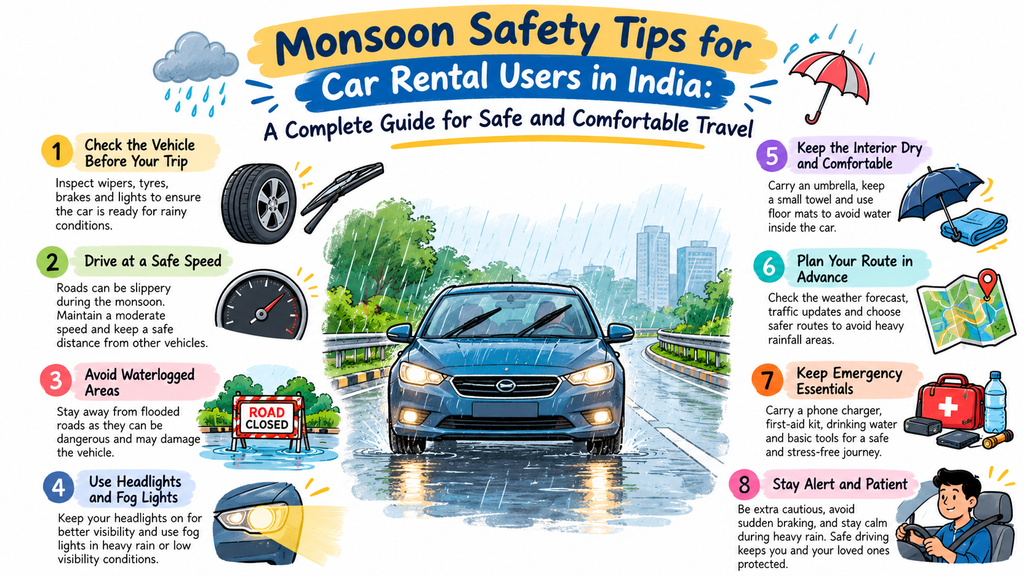
Introduction
The monsoon season brings refreshing weather, green landscapes, and beautiful travel opportunities across India. However, heavy rain can also create difficult driving conditions. Waterlogged streets, slippery roads, reduced visibility, and unexpected traffic delays can make even a short journey challenging.
Car rentals offer a practical way to travel during the rainy season. They give travelers more privacy, comfort, and control over their journeys. However, renting a vehicle during the monsoon requires careful planning and a clear understanding of road safety.
Whether you are visiting Mumbai, exploring Goa, traveling through Kerala, or commuting in Bangalore, you should prepare before starting your journey. A few simple checks can help you avoid common problems and protect yourself throughout your trip.
These monsoon safety tips for car rental users will help you choose the right vehicle, inspect its condition, understand rental policies, and drive more carefully in wet weather.
For travelers who prefer two-wheelers, bike rental in India can also provide flexibility during suitable weather conditions. However, heavy rain and flooded roads can make motorcycles and scooters less safe. Always consider the weather, route, and road conditions before choosing your vehicle.
MotoShare Asia helps travelers explore vehicle rental options for different travel needs. With proper preparation and responsible driving, you can make your monsoon journey more comfortable and enjoyable.
Why Monsoon Safety Matters for Car Rental Users
Rain changes how vehicles handle the road. Even experienced drivers need extra care when driving through heavy showers or unfamiliar areas.
A rental car may also feel different from your personal vehicle. You might be unfamiliar with its brakes, steering response, mirrors, or dashboard controls.
Understanding these differences before driving can help prevent avoidable problems.
Common Monsoon Driving Challenges
Car rental users in India may encounter several difficulties during the rainy season.
Reduced visibility: Heavy rain, fogged windows, and water splashes can make it harder to see other vehicles and pedestrians.
Slippery roads: Rainwater can reduce tire grip, especially when roads contain oil, mud, or loose gravel.
Waterlogging: Low-lying streets may become flooded after heavy rainfall. Some flooded roads hide potholes, open drains, or damaged surfaces.
Traffic congestion: Cities such as Mumbai, Delhi, Chennai, and Kolkata often experience slower traffic during heavy rain.
Vehicle breakdowns: Worn tires, weak batteries, faulty wipers, and poor maintenance can create problems during wet weather.
Longer travel times: Rain-related traffic and road closures can delay airport transfers, sightseeing trips, and business journeys.
Planning ahead helps you manage these challenges more effectively.
Choose the Right Rental Car for Monsoon Travel
Your choice of vehicle can affect your comfort and safety during rainy weather. Consider your destination, passenger count, luggage, and expected road conditions before booking.
Select a Car That Matches Your Journey
A compact car may suit city travel and short trips. However, you should consider ground clearance, tire condition, and available safety features when choosing a vehicle.
For family trips or journeys with several passengers, a larger car may offer more space for luggage and belongings.
If your itinerary includes rural roads or hilly areas, check whether the vehicle suits the planned route. A standard car cannot safely handle every rough road or flooded section.
Remember that a larger vehicle does not automatically make driving through floodwater safe.
Consider Your Destination
Different Indian destinations present different monsoon challenges.
Mumbai: Frequent waterlogging and heavy traffic can delay city journeys. Choose routes carefully and avoid flooded underpasses.
Goa: Coastal roads can become slippery, while rural routes may have poor drainage. Allow extra time for beach visits and countryside trips.
Bangalore: Sudden showers can reduce visibility and slow traffic. Check your route before leaving for the airport or office.
Pune: Rain can affect roads around the city and nearby hill destinations. Exercise extra caution on steep roads and sharp bends.
Chennai: Heavy rainfall can create waterlogging in low-lying areas. Monitor local warnings before traveling.
Kolkata: Wet roads, crowded streets, and standing water can make driving more difficult. Maintain a safe distance from other vehicles.
Delhi: Rain can reduce visibility and create congestion. Watch for slippery road markings and sudden braking.
Jaipur: Rain may make dusty roads muddy and slippery. Take care when driving on uneven surfaces outside the city.
Hyderabad: Heavy showers can affect traffic and drainage. Avoid unfamiliar roads with standing water.
These examples highlight why travelers should check local conditions rather than assume every route remains safe during the monsoon.
Inspect Your Rental Car Before Driving
A vehicle inspection is one of the most important steps before starting a rainy-season journey.
Do not rely only on the rental provider’s assurance that the car is ready. Check the main safety features yourself and report any concerns before accepting the vehicle.
Check the Tires
Tires help maintain grip on wet roads. Inspect them for visible damage, uneven wear, and insufficient tread.
Ask the rental provider to address any tire concerns before you begin your trip. Also, confirm that the vehicle carries a usable spare tire or an appropriate alternative, where applicable.
Never begin a long journey in a vehicle with visibly damaged tires.
Test the Brakes and Lights
Check the headlights, brake lights, indicators, and hazard warning lights.
Test the brakes at low speed in a safe location. If you notice unusual sounds, pulling to one side, or a soft brake pedal, stop and contact the rental provider.
Do not continue driving a vehicle with a suspected brake problem.
Inspect the Wipers and Defogging System
Windshield wipers help maintain visibility during rainfall. Check that they move smoothly and clear water effectively.
Test the windshield washer and the front and rear defogging systems, where available.
If the windshield fogs up, use the appropriate ventilation or air-conditioning settings to clear it before continuing.
Check the Battery and Other Essential Features
Ask about the vehicle’s recent maintenance if you have concerns about its condition.
Check that the seat belts work properly and that the doors, windows, and mirrors function correctly. Learn how to operate the headlights, air conditioning, and hazard lights before entering busy traffic.
Take photographs or a short video of existing scratches, dents, and other visible damage. This record can help prevent disputes when you return the car.
Understand Your Rental Agreement Before Booking
A suitable rental agreement helps you understand your responsibilities during the trip.
Read the terms carefully before making payment or collecting the vehicle.
Confirm Insurance Coverage
Ask the rental provider what insurance coverage applies to the vehicle and what responsibilities you have as the renter.
Check whether the policy covers accidental damage, third-party liability, and roadside assistance. Ask about exclusions, deductibles, and any conditions that could affect a claim.
Do not assume that insurance covers every type of damage.
Flood damage, negligent driving, and unauthorized use may receive different treatment under the applicable policy.
Understand Deposits and Additional Charges
Confirm the rental price, security deposit, fuel policy, mileage limits, and late-return charges.
Ask whether the provider charges extra for additional drivers, out-of-city travel, or changes to the booking.
Keep a copy of the agreement and payment confirmation. These records can help resolve questions about the booking later.
Confirm Breakdown Assistance
Ask what you should do if the car develops a mechanical problem during heavy rain.
Find out whether roadside assistance is included and how to contact the provider.
Save the emergency contact details before starting the journey. Mobile signals may become unreliable in some remote areas.
Essential Monsoon Safety Tips for Car Rental Users
Careful driving matters more than reaching your destination quickly. Follow these practical steps whenever you drive a rental car during the rainy season.
Reduce Your Speed
Wet roads can increase stopping distances. Driving too fast also reduces your ability to react to sudden hazards.
Slow down when rain becomes heavy, visibility drops, or traffic moves unpredictably.
Avoid sudden acceleration, sharp turns, and hard braking whenever possible.
Maintain a Safe Following Distance
Leave more space between your vehicle and the car ahead.
This extra distance gives you more time to react if another driver brakes suddenly.
Avoid following buses and trucks too closely because their tires can throw water onto your windshield.
Use Your Headlights Correctly
Use your headlights when rain reduces visibility, following local traffic rules.
Avoid high beams in heavy rain or fog when they create glare that makes it harder to see.
Keep your windshield, mirrors, and windows clean to improve visibility.
Avoid Flooded Roads
Never drive through floodwater when you cannot judge its depth or the condition of the road beneath it.
Water may hide potholes, damaged road surfaces, open drains, or strong currents. It can also enter the engine and electrical systems.
Do not follow another vehicle into a flooded stretch simply because that driver crossed it.
Turn around and choose a safer route. If water covers the road ahead, wait in a safe location or postpone the journey.
Watch for Aquaplaning
Aquaplaning occurs when a layer of water prevents tires from maintaining proper contact with the road.
If you experience a sudden loss of steering control, ease off the accelerator and avoid sudden braking or sharp steering movements. Keep the steering steady while the tires regain grip.
Good tires and a suitable speed reduce the risk, but they cannot eliminate it.
Plan Your Route Before Leaving
Check weather forecasts, traffic updates, and local road advisories before departure.
Avoid routes known for waterlogging when safer alternatives exist.
For trips around Goa, Pune, or the Western Ghats, allow additional time for wet roads, poor visibility, and possible landslides. Follow official warnings and avoid closed roads.
Share your route and expected arrival time with someone you trust, especially when traveling through unfamiliar areas.
Keep Emergency Supplies in the Car
Carry drinking water, a charged phone, a power bank, a basic first-aid kit, and a flashlight.
Keep essential documents in a waterproof pouch. A small towel and suitable footwear can also help during unexpected stops.
Store emergency contact details somewhere accessible, even if your phone battery runs low.
Never Drive Through Severe Weather Warnings
If authorities advise people to avoid travel, follow their instructions.
Do not continue a sightseeing trip simply because you have already paid for the rental.
Contact the rental provider to discuss possible changes to your booking if dangerous weather affects your plans.
Your safety should always come before your itinerary.
Prepare for Breakdowns and Unexpected Delays
Even a well-maintained car can develop a problem during a difficult journey. Knowing how to respond can reduce confusion and improve your safety.
What to Do If Your Car Breaks Down
If your vehicle develops a problem, move it away from moving traffic when you can do so safely.
Turn on the hazard lights and contact the rental provider or roadside assistance service.
If the car stops in a dangerous location, avoid standing in traffic to inspect it. Move to a safer place if conditions allow.
Never attempt to repair electrical systems or enter floodwater during heavy rain.
What to Do If Water Enters the Vehicle
If rising water surrounds your vehicle, avoid attempting to cross deeper water.
Follow instructions from local authorities and emergency services. If water enters the cabin or the situation becomes dangerous, prioritize getting yourself and your passengers to safety.
Do not restart an engine that has stalled in floodwater. Contact roadside assistance and explain what happened.
Follow the rental provider’s instructions for reporting the incident and documenting any damage.
Keep Important Numbers Available
Before departure, save the rental provider’s contact number, roadside assistance details, and the relevant local emergency number.
In India, 112 serves as the pan-India emergency response number.
Share your location with emergency responders when possible and follow their instructions.
Should You Rent a Bike or a Car During the Monsoon?
The right vehicle depends on your travel plans, weather conditions, and comfort level.
A car usually offers better protection from rain than a motorcycle or scooter. It also provides more space for passengers and luggage.
However, a two-wheeler may suit short urban journeys when the weather and road conditions remain safe.
When a Car Makes More Sense
Choose a car for family travel, airport transfers, business trips, and journeys that involve several passengers.
A car can help keep passengers and luggage sheltered from ordinary rainfall. However, it does not protect against every weather hazard, and flooded roads remain dangerous.
When a Bike Rental May Be Suitable
Bike rental in India can help solo travelers explore cities without relying entirely on taxis.
A scooter may suit short trips around familiar urban areas. A commuter motorcycle may suit riders who need a practical option for everyday travel.
However, heavy rain, strong winds, slippery roads, and poor visibility increase the risks of two-wheeler travel.
Avoid riding during severe weather or on flooded roads. Always wear a properly fitted helmet and suitable protective clothing.
Travelers who want to rent a bike in India should also confirm their license eligibility, rental conditions, and insurance coverage before booking.
Monsoon Travel Checklist for Rental Car Users
Use this checklist before starting your journey.
Before booking:
- Choose a vehicle suitable for your route and passenger needs.
- Compare the total rental cost and understand the deposit rules.
- Confirm insurance coverage and roadside assistance.
- Review mileage limits, fuel terms, and cancellation conditions.
- Check weather forecasts for your destination.
Before driving:
- Inspect the tires, brakes, lights, and windshield wipers.
- Check the seat belts and mirrors.
- Photograph existing vehicle damage.
- Save the rental provider’s emergency contact details.
- Set your navigation route before moving.
- Carry drinking water, a charged phone, and essential documents.
During the journey:
- Drive at a safe speed.
- Maintain extra distance from other vehicles.
- Avoid flooded roads and unsafe shortcuts.
- Stop somewhere safe if visibility becomes poor.
- Follow official weather and traffic advisories.
- Contact the provider immediately if a problem develops.
Before returning the car:
- Follow the agreed fuel policy.
- Check the vehicle for personal belongings.
- Report any damage or incident honestly.
- Keep your return confirmation and payment records.
How MotoShare Asia Can Help With Vehicle Rentals
Finding a suitable rental vehicle is an important part of planning a comfortable trip.
MotoShare Asia focuses on vehicle rental and sharing options for travelers who want more flexibility when exploring destinations across Asia.
Depending on the vehicles and services available in your chosen location, a rental platform can help you compare options and review important booking details before making a decision.
Choose a Vehicle for Your Travel Needs
Different trips require different vehicles.
A car may suit families, groups, and travelers carrying several bags. A scooter or motorcycle may suit eligible riders who want to explore nearby attractions independently.
Before booking through MotoShare Asia, review the available vehicle details and choose an option that matches your route, driving experience, and expected weather conditions.
Review Pricing and Rental Conditions
Understand the full rental cost before confirming your booking.
Check the rental duration, security deposit, fuel policy, mileage restrictions, insurance terms, and any extra charges.
Transparent information helps you compare options and plan your travel budget more carefully.
Confirm Vehicle Availability and Pickup Details
Vehicle availability and rental terms can vary by destination and provider.
Confirm your pickup location, return arrangements, required documents, and any restrictions on traveling outside the selected area.
Do not assume that every vehicle, feature, or rental service is available in every city.
Travel Responsibly During the Monsoon
Booking a vehicle is only one part of safe travel.
Check local weather conditions, inspect your vehicle, and avoid dangerous routes. If heavy rain makes driving unsafe, postpone your journey or choose another travel option.
MotoShare Asia can be part of your travel planning process, while responsible decisions help you protect yourself and your passengers.
Frequently Asked Questions
1. Is it safe to rent a car during the monsoon in India?
Yes, renting a car can be suitable during ordinary rainy conditions if the vehicle is well maintained and you drive carefully.
Inspect the vehicle, check local weather warnings, and avoid flooded roads. Postpone unnecessary travel when authorities warn against driving.
2. What should I check before accepting a rental car?
Check the tires, brakes, headlights, indicators, windshield wipers, mirrors, and seat belts.
Also, inspect existing damage, confirm insurance coverage, and understand the rental agreement before accepting the vehicle.
3. Can I drive a rental car through flooded roads?
No. You should avoid flooded roads when you cannot judge the water’s depth or the condition of the road underneath.
Floodwater can hide dangerous obstacles and damage the vehicle. Find a safer route instead.
4. Does rental car insurance cover flood damage?
Coverage depends on the insurance policy and rental agreement.
Ask the provider about flood damage, accidental damage, exclusions, deductibles, and reporting requirements before booking.
Never assume that every type of water-related damage receives coverage.
5. What should I do if my rental car breaks down in heavy rain?
Move away from moving traffic when safe, turn on the hazard lights, and contact the rental provider or roadside assistance.
Avoid attempting repairs in dangerous conditions. Follow emergency instructions if the vehicle is stranded in a hazardous location.
6. Is a car better than a bike during the monsoon?
A car generally offers better shelter from rain and more space for passengers and luggage.
A bike may suit short journeys when weather and road conditions are safe. Heavy rain, poor visibility, and slippery roads make two-wheeler travel riskier.
7. Can I rent a vehicle for an outstation trip during the monsoon?
That depends on the rental provider’s terms, vehicle availability, and permitted travel area.
Confirm outstation permissions, mileage limits, insurance conditions, and breakdown support before booking. Check road closures and weather warnings along your route.
8. How can I reduce the risk of accidents on wet roads?
Drive slowly, maintain a safe following distance, and avoid sudden braking or sharp turns.
Keep your windshield clear and your tires in good condition. Never attempt to cross flooded roads.
9. What documents do I need to rent a car in India?
Requirements vary by provider and vehicle category.
You will generally need a valid driving license accepted for the vehicle and rental arrangement. Providers may also request government-issued identification and other documents.
International visitors should confirm the applicable license requirements before booking.
10. Should I book a rental car before traveling during the monsoon?
Booking ahead can help you compare available vehicles and understand the rental terms before your trip.
However, check the cancellation policy and ask how the provider handles severe weather, road closures, or changes to your itinerary.
11. Are scooters and motorcycles suitable for monsoon sightseeing?
They can suit some short journeys when the roads are safe and rainfall is light.
However, slippery surfaces, standing water, and poor visibility increase accident risks. Wear a suitable helmet and protective clothing, and avoid riding during severe weather.
12. How can MotoShare Asia help me plan a rental trip?
MotoShare Asia can help you explore vehicle rental options that may suit your travel needs.
Review the available vehicles, prices, rental conditions, and pickup details before confirming a booking. Always verify local availability and the specific services offered by the provider.
Conclusion
Monsoon travel in India can be enjoyable when you prepare carefully and make safe decisions. Rain may create beautiful landscapes and refreshing weather, but it can also bring slippery roads, traffic delays, and unexpected hazards.Before renting a car, inspect the vehicle, review the rental agreement, confirm insurance coverage, and save emergency contact details. During your journey, reduce your speed, maintain a safe distance, and avoid flooded roads.Choose your vehicle according to your destination, passenger needs, and the weather forecast. A car may provide better shelter during ordinary rainfall, while a bike or scooter may suit certain short trips in safe conditions.Most importantly, never allow a booking, sightseeing plan, or tight schedule to push you into driving through dangerous weather.