Introduction
Choosing the right mode of transportation can completely transform your experience of navigating Indian cities. Whether you are landing at the airport in Delhi, dodging the legendary traffic jams of Bangalore, or planning a coastal road trip across Goa, how you move matters. For first-time travelers, tourists, daily commuters, and students, traditional options like owning a vehicle or relying exclusively on local cabs can quickly drain your budget or leave you stranded.
This has led to a massive rise in the popularity of self-drive vehicle rental in India. Instead of dealing with the hassles of ownership or negotiating with rigid taxi fares, modern commuters are choosing the freedom of renting. However, a major decision remains: Should you choose a short-term vehicle rental or a long-term vehicle rental?
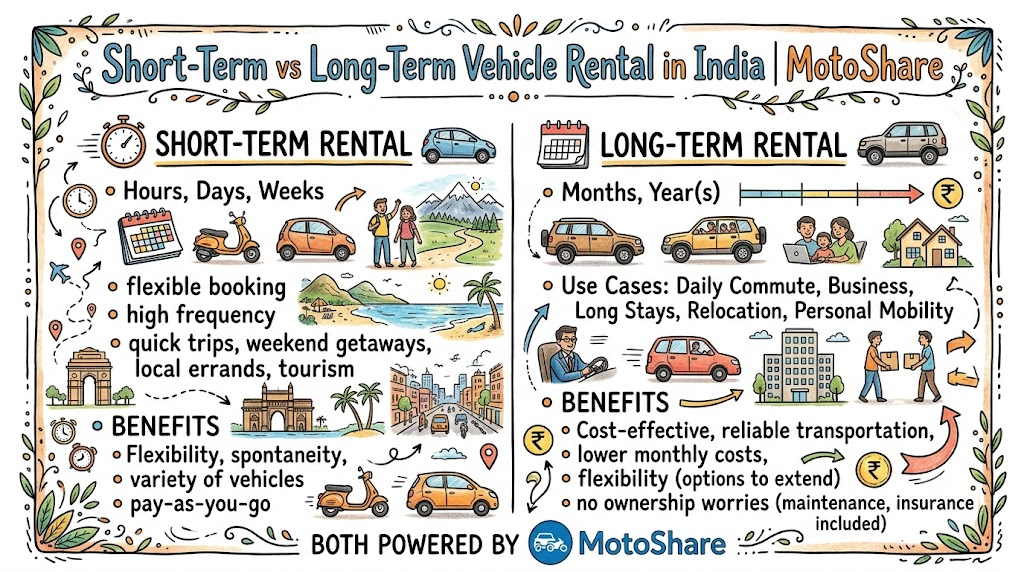
Short-term rentals (typically by the hour or day) offer immediate flexibility for spontaneous plans and weekend getaways. On the flip side, long-term rentals (weekly, monthly, or seasonal arrangements) provide deep discounts and a reliable daily ride for extended stays. Understanding the differences between these two options ensures you do not overspend on your transport while enjoying a seamless travel experience across India.
Why Renting a Bike in India Is a Smart Choice
For decades, getting around major Indian hubs meant waiting around for public buses, haggling with auto-rickshaws, or spending heavily on metered cabs. Today, a growing preference for independence has shifted the focus toward two-wheelers. Choosing a bike on rent in India is widely considered one of the smartest logistical moves a traveler or resident can make.
The primary advantage is simple: absolute control over your schedule. When you rent a bike in India, you are no longer constrained by fixed transit timings or forced to pay surge pricing during peak morning and evening hours. If you want to pull over at a roadside tea stall in Pune or take a detour down a scenic lane in Jaipur, you can do so instantly.
Furthermore, Indian roads are famously crowded. In high-density metropolitan areas like Mumbai, Bangalore, and Kolkata, traffic congestion can turn a brief commute into an hours-long ordeal. A motorcycle or scooter allows you to easily filter through dense traffic lanes, saving massive amounts of time. Finding a parking space for a car in crowded markets can be nearly impossible, but a two-wheeler fits into compact spots with ease, minimizing parking stress. Ultimately, it provides an unmatched combination of low fuel consumption, low rental rates, and point-to-point agility.
Who Should Rent a Bike in India?
The beauty of a modern self-drive bike rental ecosystem is that it caters to a remarkably wide variety of people. Different groups find unique value in bypassing traditional transport:
- Tourists and Backpackers: For those visiting heritage hotspots like Jaipur, coastal states like Goa, or cultural centers like Kolkata, local sightseeing requires flexibility. A bike rental for tourists lets individuals discover offbeat view points and hidden alleys that larger tourist buses or cabs cannot access.
- Daily Commuters and Working Professionals: If you are a professional living in a tech hub like Bangalore, Hyderabad, or Chennai, getting to the office on time is a daily battle. Renting a reliable commuter bike or scooter provides an independent, predictable ride without the financial burden of vehicle ownership.
- Students: Relocating to university hubs in Pune, Delhi, or Noida often requires an affordable way to travel between hostels, campuses, and local markets. Budget travelers and students utilize two-wheelers because they offer the lowest per-kilometer travel cost available.
- First-Time Travelers: Visitors arriving in India for the first time can use two-wheelers to quickly get a feel for local navigation without committing to complex public transit route maps.
Benefits of Renting a Bike for First-Time Travelers
Stepping into a new country or city can feel overwhelming. Navigating local transport networks requires an understanding of regional languages, ticketing systems, and unwritten transit rules. For anyone arriving fresh, a first-time bike rental guide highlights how a two-wheeler serves as the ultimate equalizer.
First, it eliminates the language barrier often encountered when negotiating fares with local transport drivers. By managing your booking directly through a digital platform, your pricing is transparent and set in advance. You know exactly what you are paying before you ever turn the key.
Second, it acts as an affordable bike rental India solution that preserves your overall travel budget. Instead of spending large sums on multiple short-distance taxi rides throughout the day, a single daily rental rate covers all your journeys. This leaves you with more financial freedom to spend on experiences, food, and entry tickets.
Finally, travel in India by bike builds confidence. It allows you to explore at your own pace, stop whenever you need to check a map, and fully immerse yourself in the vibrant surroundings of cities like Mumbai or Chennai without feeling rushed.
Types of Bikes You Can Rent in India
The rental market features a diverse selection of two-wheelers designed to match varying terrains, distances, and rider preferences. Selecting the right vehicle category ensures safety, comfort, and efficiency during your journey.
Scooters
Gearless scooters like the Honda Activa or Suzuki Access are the undisputed kings of urban environments. Because they feature automatic transmissions, they are incredibly easy to ride, making them a top choice for beginners, casual backpackers, and anyone navigating heavy city traffic in places like Mumbai or Delhi. They also feature convenient under-seat storage space for groceries or light luggage.
Commuter Bikes
Standard commuter motorcycles (such as the Hero Splendor or Bajaj Pulsar) provide a highly balanced option for daily travel. Featuring manual gears and excellent fuel economy, these bikes are ideal for students and professionals in Bangalore or Hyderabad who need a rugged, reliable machine for predictable daily routes.
Sports Bikes
For riders who appreciate performance and sharp handling, premium sports bikes like the KTM RC series or Yamaha R15 are widely available. These are best suited for experienced enthusiasts looking to enjoy recreational weekend rides on well-paved highways outside urban centers like Pune or Chennai.
Adventure Bikes
If your travel itinerary involves rough roads, rural paths, or hilly terrains, adventure motorcycles like the Royal Enfield Himalayan or Suzuki V-Strom are built for the task. They offer long-travel suspension, high ground clearance, and an upright riding posture that prevents fatigue during multi-day long-distance journeys.
Cruiser Motorcycles
Cruisers like the Royal Enfield Classic 350 or Meteor are deeply woven into Indian riding culture. Featuring high torque, heavy frames, and comfortable seating, these motorcycles are the premier choice for long-distance touring along open highways, such as the coastal routes of Goa or the desert highways surrounding Jaipur.
Electric Bikes
With charging infrastructure growing rapidly across metro cities, high-speed and low-speed electric two-wheelers are becoming common choices. They offer a completely silent ride, zero tailpipe emissions, and an exceptionally low operating cost, making them perfect for eco-conscious city travelers on short, predictable routes.
How to Choose the Right Bike for Your Trip
Picking a two-wheeler involves matching the vehicle’s features to the specific conditions of your upcoming journey. Before making a booking, pause and evaluate these key factors:
- Terrain and Route Conditions: If you are exploring the smooth, wide avenues of New Delhi, an automatic scooter or light commuter bike is ideal. However, if your route takes you into the uneven terrain or potholed streets often encountered in changing weather, a motorcycle with sturdier suspension and larger wheels provides much better stability.
- Distance: For short trips under 30 kilometers a day around local markets in Goa or Jaipur, a scooter keeps things effortless. If you plan to ride hundreds of kilometers between major cities, a cruiser or adventure bike is necessary to ensure rider comfort.
- Riding Experience: Never rent a heavy, high-displacement motorcycle if you have only ever ridden light scooters. Match the weight and power of the bike to your personal comfort level to maintain safety on busy Indian roads.
- Pillion and Luggage Capacity: If you are traveling with a companion or carrying heavy backpacks, ensure the vehicle has a spacious seat and strong rear grab rails or luggage racks to securely tie down your bags.
Documents Usually Needed to Rent a Bike in India
To ensure compliance with local motor vehicle laws and to maintain a secure rental process, platforms and owners require clear documentation before handing over any keys. Keep these items ready:
Valid Driving License
You must hold a valid driving license that specifically authorizes the operation of geared or gearless two-wheelers. For domestic travelers, a state-issued Indian driving license is perfect. For foreign tourists, an International Driving Permit (IDP) accompanied by your original national driving license is generally required by law enforcement.
Government ID Proof
A reliable, government-issued photo identity document must be provided. For Indian citizens, an Aadhaar Card or Voter ID is standard. For international travelers, a valid Passport along with a current Visa copy is mandatory.
Address Proof
In certain long-term rental scenarios, providers may request a document confirming your local or permanent address, such as a recent utility bill, rental agreement, or a formal corporate/university declaration letter.
Security Deposit Requirements
Most vehicle sharing platforms require a small refundable security deposit to guard against minor damages or traffic violations. The specific amount varies based on the value of the bike, but it is typically processed via online payment and refunded within a set number of days after the vehicle is returned safely.
Things to Check Before Renting a Bike
To avoid unexpected disputes, technical breakdowns, or financial penalties during your ride, always conduct a thorough physical inspection before driving away from the pickup point.
- Vehicle Condition: Check for existing scratches, dents, or structural wear. Take high-resolution photos or a walk-around video of the entire vehicle in daylight as clear evidence of its initial state. Test the brakes, ensure the headlights, taillights, and turn indicators function correctly, and look at the tire tread depth.
- Fuel Policy: Clarify the fuel rules. Some providers operate on a “like-for-like” policy, where you must return the vehicle with the exact same amount of fuel it had at pickup. Others provide a full tank and expect a full tank upon return.
- Insurance Coverage: Confirm that the vehicle has a valid commercial insurance policy that covers self-drive rental use. This protects you from extreme financial liability in the event of an unforeseen accident.
- Mileage Limits: Review whether your plan features unlimited kilometers or enforces a strict daily mileage cap. Exceeding daily caps usually incurs an additional per-kilometer fee.
- Helmet Availability: Ensure that a sturdy, ISI-certified safety helmet is provided with the rental. If you are riding with a pillion passenger, explicitly request a second safety helmet.
- Rental Agreement Terms: Read through the fine print of the rental agreement. Pay close attention to rules regarding late-return penalties, breakdown assistance policies, and cleaning fees.
Safety Tips for Riding a Rental Bike in India
Riding in India is an exhilarating experience, but it demands constant focus and defensive driving techniques due to the fast-paced, unpredictable nature of city traffic.
Follow Traffic Rules
Always respect local traffic signals, avoid lane splitting at high speeds, and maintain a safe following distance behind larger vehicles. Never ride on designated footpaths or wrong-way lanes, as this carries heavy legal penalties and endangers pedestrians.
Wear a Helmet
This is non-negotiable. Always fasten your helmet securely before starting the engine. Wearing a helmet is not just a legal requirement across all Indian states; it is your primary defense against severe injuries.
Avoid Overspeeding
Keep your speed within the posted limits. Major city roads in places like Bangalore, Delhi, and Mumbai are heavily monitored by speed cameras, and unexpected speed bumps or pedestrian crossings require quick stopping times.
Check Weather and Road Conditions
Monsoon seasons can cause sudden waterlogging, slippery asphalt, and reduced visibility in cities like Mumbai or Kolkata. Reduce your speed significantly when it rains, and look out for loose gravel or potholes on unfamiliar roads.
Keep Emergency Contacts Handy
Save the contact details of your vehicle sharing platform’s customer care line, local roadside assistance, and emergency emergency numbers on your phone so you can quickly call for help if an issue arises.
Cost of Bike Rental in India
Rental costs are highly affordable compared to Western markets, but prices fluctuate based on the specific city, seasonal tourist demand, and the type of vehicle selected.
| Bike Category | Approximate Daily Rental Range | Common Use Cases |
| Scooters | ₹300 – ₹800 | Quick city errands, local beach trips, short daily commutes |
| Commuter Bikes | ₹400 – ₹1,000 | Daily office commutes, student travel, moderate distances |
| Premium / Sports Bikes | ₹1,200 – ₹3,500 | Weekend enthusiast rides, highway cruising, premium travel |
| Adventure Bikes | ₹1,500 – ₹4,500 | Long-distance touring, hill station exploration, rough terrains |
Common Mistakes First-Time Travelers Should Avoid
Many travelers run into avoidable difficulties simply because they rush through the booking process. Avoid these common pitfalls to ensure a smooth trip:
- Booking Solely on the Lowest Price: Selecting the cheapest available listing often means compromise on vehicle maintenance or encountering hidden fees later. Choose well-reviewed vehicles from trusted platforms.
- Ignoring the Initial Vehicle Inspection: Failing to take photos or point out pre-existing damage during pickup can result in you being wrongfully charged for those issues when returning the bike.
- Choosing an Overpowered Bike: Opting for a heavy cruiser or aggressive sports bike without having sufficient experience handling that class of motorcycle can lead to balance issues and accidents in stop-and-go traffic.
- Skipping the Rental Agreement: Assuming everything is covered without reading the breakdown, damage, or fuel terms leaves you exposed to unexpected out-of-pocket costs.
Bike Rental vs Public Transport vs Taxi
To visualize how renting a two-wheeler stacks up against other popular modes of transport in India, look at this comprehensive breakdown:
| Feature | Bike Rental | Public Transport (Metro/Bus) | Taxi / Cab Services |
| Cost | Exceptionally low daily rate; highly budget-friendly. | Lowest upfront cost per ride. | Highest cost; susceptible to surge pricing. |
| Convenience | High; pick up the vehicle once and use it anywhere at any time. | Moderate; depends heavily on fixed routes and operating schedules. | Moderate; requires waiting for a driver to accept and arrive. |
| Flexibility | Maximum; change paths, stop anywhere, explore remote paths easily. | Low; constrained to designated stops and transit corridors. | Moderate; travels to your destination but cannot do multiple stops easily. |
| Comfort | Good for solo/duo riders; open-air exposure. | Low during peak rush hours due to intense crowding. | High; air-conditioned environment shielded from weather. |
| Travel Experience | Highly immersive; feel the local atmosphere firsthand. | Standard; can feel stressful or confusing for newcomers. | Isolated; viewing the city strictly through a glass window. |
| Best Use Cases | Sightseeing, active commuting, budget multi-stop travel. | Long straight transits, avoiding traffic via Metro networks. | Airport transfers with heavy luggage, bad weather days. |
How MotoShare India Can Help Travelers
When you are ready to book a vehicle, choosing a reliable platform makes all the difference. MotoShare India transforms the rental landscape by operating a seamless peer-to-peer vehicle sharing network that connects trusted vehicle owners directly with renters.
Easy Online Booking
Say goodbye to walking through crowded rental markets looking for a vehicle. With MotoShare, you can browse available options, check detailed specifications, and secure your booking within minutes through an intuitive digital interface.
Wide Range of Vehicles
Whether you need an automatic scooter for a casual weekend in Goa, a fuel-efficient commuter bike for your monthly office travel in Hyderabad, or an adventure motorcycle for highway touring, the diverse peer-to-peer fleet has options for every budget.
Transparent Pricing
What you see is what you pay. MotoShare eliminates hidden agent commissions and unexpected booking charges, allowing you to plan your travel expenses with complete confidence.
Verified Vehicle Owners
Safety and legitimacy are core priorities. Every vehicle owner listing on the platform goes through a strict verification process, and only legally compliant, commercially registered vehicles are permitted, giving you total peace of mind on the road.
Flexible Rental Options
Whether your plans call for a short-term daily rental to explore heritage monuments in Jaipur or a long-term monthly rental for your semester at a university in Pune, the platform supports highly flexible durations tailored to your lifestyle.
Availability Across Indian Cities
With an expanding network across Delhi, Mumbai, Bangalore, Kolkata, Chennai, and beyond, MotoShare provides reliable access to personal mobility exactly where you need it.
Frequently Asked Questions
Can tourists rent a bike in India?
Yes, domestic and international tourists can easily rent bikes in India, provided they supply valid identity proof and a driving license that legally permits them to operate two-wheelers.
Is an international driving permit required?
For foreign nationals, an International Driving Permit (IDP) is required by law alongside their original domestic driving license. Domestic Indian travelers only need their standard state-issued driving license.
How much does bike rental cost in India?
Daily rental costs typically range from ₹300 to ₹800 for automatic scooters, while premium cruiser or adventure motorcycles can range between ₹1,500 and ₹4,500 per day depending on the model and city.
Are helmets provided with the rental vehicle?
Yes, trusted rental options include an ISI-certified rider helmet with the vehicle. You can easily request a secondary helmet for a pillion passenger during the booking process.
Can I rent a bike without a security deposit?
Most professional platforms require a small security deposit to cover potential damages or traffic fines. This deposit is clearly stated upfront and refunded quickly after a safe return.
What happens if the rental bike breaks down?
If you experience a mechanical issue, park safely and immediately contact the owner or the platform’s dedicated support line to arrange roadside assistance or a replacement vehicle.
Can I take the rental bike to another city?
Yes, but you must confirm the regional permit terms with the owner beforehand. Crossing state borders often requires paying an additional state transport tax.
Is fuel included in the rental price?
Generally, fuel is not included. Vehicles are provided with a baseline amount of fuel, and renters are responsible for refilling the tank according to their travel needs.
What documents do I need to keep on the bike while riding?
You should ensure copies of the vehicle’s Registration Certificate (RC), commercial insurance policy, and a valid Pollution Under Control (PUC) certificate are stored safely in the vehicle storage compartment.
Are long-term rentals cheaper than daily options?
Yes, long-term rentals offer significant discounted rates. Weekly or monthly bookings drastically reduce the effective daily cost, making them ideal for students and professionals.
Conclusion
Navigating India’s vibrant, fast-paced destinations requires an agile transportation strategy. Comparing short-term and long-term vehicle rentals reveals that both options offer incredible paths toward independent travel. Short-term rentals grant instantaneous flexibility for weekend explorers and tourists, while long-term sharing agreements provide unmatched, cost-effective daily reliability for students and working professionals.
By skipping the rigid boundaries of public transit and the high costs of taxi services, a self-drive rental puts you firmly in control of your journey. Ready to experience the ultimate freedom of exploring Indian cities on your own terms? Head over to MotoShare asia today, select the perfect vehicle for your needs, and book your next ride with complete confidence!