Introduction
Getting around Europe can be simple when you choose suitable transport. A motorcycle may suit a countryside escape. A scooter can help with short city journeys. A car may be more practical for families and longer trips.
Today, travelers can explore rental options through local businesses and online marketplaces. These services give people more ways to find vehicles near their destinations.
Vehicle rentals also create opportunities for private owners. People with unused motorcycles or cars can explore ways to offer them for rent. Rental businesses can use digital tools to organize their work and serve customers.
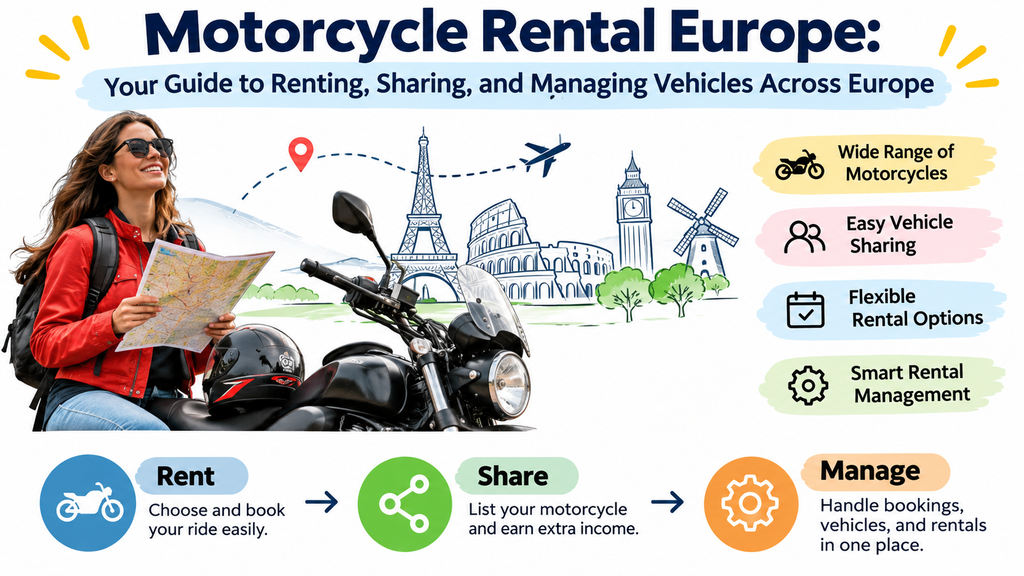
The motorcycle rental Europe market brings these needs together. This guide explains how to find a suitable vehicle, understand rental costs, and avoid common problems. It also covers peer-to-peer rentals, vehicle listings, and rental software. You will also learn how MotoShare Europe fits into the online vehicle rental space.
1. Why Vehicle Rentals Matter for European Travel
Every traveler has different transport needs. Some visitors want a quick way to explore a city. Others plan long road trips through several destinations.
A rental vehicle can give travelers more control over their schedules. It can also help them reach places that may not suit their planned public transport route.
Here are some common reasons people rent vehicles:
- Flexible travel: Choose when and where to travel.
- Local exploration: Visit nearby towns and attractions.
- Short-term transport: Rent a vehicle only when needed.
- Family convenience: Choose a car with suitable passenger space.
- Outdoor experiences: Explore scenic routes on a motorcycle.
- Business travel: Move between meetings and work locations.
The best choice depends on your destination, budget, and travel plans. Always compare local transport options before booking.
2. Which Vehicle Should You Rent?
The right vehicle can make your journey easier. Start by considering your route, passengers, luggage, and driving experience.
| Vehicle type | Suitable for | Main advantage | Checks before booking |
|---|---|---|---|
| Motorcycle | Experienced riders | Open-road travel | Licence, safety gear, insurance |
| Scooter | City journeys | Convenient local transport | Licence, helmet, vehicle condition |
| Bicycle | Short-distance travel | Simple local exploration | Brakes, tyres, lights |
| Car | Families and groups | Passenger and luggage space | Insurance, fuel, mileage |
| Touring motorcycle | Extended rides | Longer-distance comfort | Experience, luggage, maintenance |
Do not select a vehicle only because it looks attractive. Make sure it suits the road conditions and your experience.
3. Find Motorcycle Rental Europe Options With Confidence
Finding a suitable motorcycle requires careful comparison. Different providers may offer different models, rental rules, and collection arrangements.
When searching for motorcycle rental Europe, use these steps:
- Choose the city or region where you need the motorcycle.
- Select your expected rental dates.
- Compare the available motorcycle categories.
- Review each vehicle description.
- Check photos and visible condition.
- Read the provider’s rental requirements.
- Compare deposits, insurance, and mileage rules.
- Confirm the collection and return process.
Some locations may offer several motorcycle categories. Others may have fewer listings.
Do not assume every online platform has vehicles in every city. Check the actual listing and availability for your travel dates.
4. Understand the Difference Between Rental Shops and Online Marketplaces
Travelers can find rental vehicles through different business models. Each model offers a different way to discover and arrange a rental.
Traditional rental companies
Traditional companies manage vehicles through their own fleets or business partners. They usually provide a defined rental process and set conditions.
Independent rental shops
Local shops may focus on specific vehicle types or destinations. They can also provide local information about roads and pickup locations.
Online rental marketplaces
Marketplaces bring vehicle listings together online. Travelers can explore participating providers and compare available options.
Peer-to-peer rental services
Peer-to-peer services connect private vehicle owners with potential renters. This model gives owners another way to explore rental opportunities.
Before choosing a service, review its booking process and responsibilities. The marketplace, vehicle owner, and renter may each have different obligations.
5. How Peer-to-Peer Motorcycle Rental Europe Works
The peer to peer motorcycle rental Europe model connects motorcycle owners with people who want to rent.
It can create opportunities for owners who do not use their motorcycles every day. It can also give travelers another way to find local vehicles.
A typical process may look like this:
Owner prepares the motorcycle
The owner checks the vehicle and gathers accurate details. They also prepare photos and rental conditions.
Owner creates a listing
The listing explains the motorcycle model, location, condition, and rental requirements.
Traveler searches for a vehicle
The renter checks listings that match the destination and rental dates.
Both sides review the conditions
They discuss documents, insurance, deposits, and collection arrangements.
The booking moves forward
The owner and renter follow the platform’s process to confirm the rental.
Both sides complete the handover
They inspect the motorcycle and record its condition before the journey.
Peer-to-peer rentals can offer another choice beyond traditional rental shops. However, users should never assume every platform provides the same insurance or protection.
6. Plan Your Motorcycle Rental Budget
The advertised price does not always show the complete rental cost. Several other expenses may affect your final budget.
The motorcycle rental cost Europe can depend on the destination, motorcycle category, season, rental period, and provider.
Review these possible charges:
| Expense | What to understand |
|---|---|
| Daily rate | Basic price for the rental period |
| Deposit | Amount held under the rental agreement |
| Insurance | Included cover and exclusions |
| Mileage | Distance included in the price |
| Fuel | Required fuel level at return |
| Equipment | Charges for helmets or accessories |
| Delivery | Cost of a different pickup location |
| Late return | Extra fees for delayed returns |
| Damage | Responsibility for repairs or claims |
Ask the provider for a complete price breakdown. Compare the final amount instead of looking only at the daily rate.
Also, check whether the provider offers roadside assistance. Understand what to do if the motorcycle develops a problem during your trip.
7. Documents You May Need for a Rental
Driving requirements differ across European countries. They also depend on the vehicle category and your personal circumstances.
A rental provider may request:
- A valid driving licence.
- An international driving permit, where required.
- A passport or accepted identity document.
- A payment card.
- A booking confirmation.
- Other documents required by the provider.
Check the local driving rules before making a reservation. Confirm that your licence covers the motorcycle or scooter category.
Some rental companies may also set minimum age or riding experience conditions. Ask about these requirements before paying.
If you plan to travel between countries, check whether the rental agreement allows cross-border journeys.
8. Complete These Vehicle Checks Before Pickup
A careful inspection can help prevent disagreements. It can also help you identify problems before starting your journey.
Use this checklist at the collection point:
- Check the bodywork for scratches and dents.
- Inspect the tyres and wheels.
- Test the brakes.
- Check the headlights and indicators.
- Review the mirrors and controls.
- Confirm the fuel level.
- Check the included safety equipment.
- Photograph existing damage.
- Ask about any known mechanical issues.
For motorcycles, make sure the helmet fits properly. Confirm that you have the required protective equipment.
Do not ride a vehicle that appears unsafe. Ask the provider to address serious problems before you leave.
9. How Free Vehicle Rental Management Software Helps Businesses
A rental company must organize more than vehicle bookings. It also needs to manage customers, returns, payments, and maintenance.
Small businesses may start with spreadsheets or paper records. These methods can become difficult when the fleet grows.
Free vehicle rental management software may help businesses organize basic rental activities.
Depending on the provider and plan, it may include:
- Vehicle information records.
- Customer details.
- Booking calendars.
- Reservation tracking.
- Return schedules.
- Payment records.
- Fleet availability.
- Basic business reports.
Free software can help new businesses control their initial costs. However, some products limit users, vehicles, bookings, or reports.
Review the plan details before moving your business records. Also check data protection and customer privacy features.
10. Compare Free Car Rental Software for Your Business
Car rental companies need accurate vehicle and customer records. They also need a reliable way to manage reservations.
When comparing free car rental software, look at the following features:
| Feature | Main use | Business benefit |
|---|---|---|
| Vehicle database | Stores car details | Keeps fleet information organized |
| Booking calendar | Tracks reservations | Helps prevent date conflicts |
| Customer records | Stores renter information | Makes records easier to find |
| Payment tracking | Records transactions | Supports financial checks |
| Return management | Tracks expected returns | Helps plan vehicle use |
| Maintenance records | Stores service details | Supports regular vehicle care |
| Reports | Reviews business activity | Helps owners assess performance |
A free tool may suit a small rental operation. A larger business may need advanced controls or more storage.
Compare the software with your actual workflow. Do not pay for features your team does not need.
11. Select Bike Rental Software That Matches Your Operations
Bike rental companies may manage bicycles, scooters, or motorcycles. Their needs can differ based on the vehicles and customers they serve.
Suitable bike rental software may help with:
Vehicle records
Store details about each vehicle. Include the model, category, condition, and maintenance information.
Booking schedules
Review current and future reservations. Keep the calendar updated when customers change their plans.
Customer management
Organize customer information and booking history. Use suitable access controls to protect personal details.
Maintenance tracking
Record inspections and repairs. This can help staff monitor vehicle condition.
Payment records
Keep a clear record of rental charges and payments. Check whether the system supports your payment process.
Business reports
Review available booking and rental information. Use these records to understand business activity.
Test the system before using it across your company. Staff should understand how to manage its main functions.
12. Why Scooter Rental Software Can Help Local Shops
Scooter rental businesses may handle many short-term reservations. Customers may rent scooters for a few hours or several days.
Staff must track collection times, returns, and vehicle condition. A digital system may help organize these tasks.
Scooter rental software may offer features such as:
- Scooter profiles.
- Customer records.
- Booking schedules.
- Rental period tracking.
- Return reminders.
- Maintenance notes.
- Payment records.
- Basic reports.
The right product depends on the shop’s size and rental process. Check whether the software supports the number of scooters and bookings you manage.
Remember that software cannot replace safety checks. Staff must inspect each scooter before handing it to a customer.
13. How to Rent Out My Motorcycle
Private motorcycle owners may want to earn from vehicles they rarely use. Online marketplaces can offer a way to explore rental opportunities.
If you are searching for rent out my motorcycle, follow these steps before accepting a renter.
Review local laws
Check whether private motorcycle rentals are allowed. Understand registration, tax, and business requirements.
Confirm insurance
Contact your insurer. Ask whether your current policy covers paid rental activity.
Prepare the motorcycle
Check the brakes, tyres, lights, mirrors, and general condition. Complete necessary maintenance.
Create an accurate listing
Add clear photos and correct vehicle details. Explain the motorcycle’s condition and included equipment.
Set rental rules
Explain the price, deposit, mileage allowance, and return conditions.
Check the renter
Confirm the correct licence, age, and riding experience requirements.
Record the handover
Take photos and document the vehicle condition before and after the rental.
Do not accept a rental request until you understand your legal and insurance responsibilities.
14. How to List My Car for Rent
Car owners may also explore rental opportunities when they rarely use their vehicles.
If you want to list my car for rent, preparation matters. A clear listing can help renters understand the vehicle and its conditions.
Follow this process:
- Check local rules for private car rentals.
- Confirm insurance coverage for rental use.
- Review finance or lease restrictions.
- Inspect the car and complete maintenance.
- Clean the vehicle before taking photos.
- Write an accurate description.
- Explain fuel and mileage rules.
- Set pickup and return arrangements.
- Check renter eligibility.
- Record the vehicle condition at handover.
Personal car insurance may not cover paid rental use. Confirm the correct coverage before offering your vehicle.
15. What to Expect From a Vehicle Rental Booking System
A vehicle rental booking system helps businesses organize reservations and related information.
Some systems support online booking requests. Others focus on internal records and fleet schedules.
Useful functions may include:
| Function | What it helps manage |
|---|---|
| Reservation calendar | Booking dates and times |
| Vehicle records | Vehicle details and condition |
| Customer profiles | Renter information |
| Payment tracking | Rental payments |
| Availability management | Vehicle schedules |
| Return tracking | Expected return dates |
| Reports | Rental activity |
| Staff access | User permissions |
Before choosing a system, identify the problems you want to solve. Then compare products based on features, pricing, support, and ease of use.
16. Common Rental Mistakes and How to Avoid Them
Small mistakes can lead to extra costs, delays, and disagreements. Both renters and owners should follow clear processes.
Mistake 1: Booking Without Checking the Route
A vehicle may not suit your planned journey.
Solution: Review road conditions and choose a vehicle that matches your route.
Mistake 2: Ignoring Licence Requirements
Your licence may not cover the selected vehicle category.
Solution: Check local rules before confirming the booking.
Mistake 3: Looking Only at the Advertised Price
The final cost may include extra charges.
Solution: Ask about deposits, insurance, mileage, equipment, and delivery.
Mistake 4: Skipping the Rental Agreement
You may misunderstand cancellation or damage conditions.
Solution: Read the full agreement and ask questions before signing.
Mistake 5: Not Photographing Existing Damage
You may face disagreements after returning the vehicle.
Solution: Take clear photos before leaving the pickup location.
Mistake 6: Assuming Insurance Covers Everything
Some policies exclude certain drivers or rental activities.
Solution: Confirm the coverage and exclusions with the responsible provider.
Mistake 7: Keeping Scattered Booking Records
Staff may miss reservations or return dates.
Solution: Use an organized calendar or suitable rental software.
Mistake 8: Forgetting Regular Maintenance
Poor vehicle condition can create safety problems.
Solution: Follow inspection schedules and record repairs.
Mistake 9: Setting Unclear Return Rules
Different expectations can cause conflict.
Solution: Explain return times, fuel rules, and late fees in writing.
Mistake 10: Choosing Software Without Testing It
A product may not support your daily work.
Solution: Test its main functions and review plan limits before adopting it.
17. How MotoShare Europe Supports Vehicle Rental Discovery
MotoShare Europe focuses on online vehicle rental and connections between renters and vehicle providers.
Its marketplace approach relates to several vehicle categories, including motorcycles, scooters, bikes, and cars. This can be relevant to travelers, private owners, and rental businesses.
The platform also promotes rental management software for rental operators.
These two services have different purposes:
- Vehicle rental marketplace: Helps users discover vehicle listings and providers.
- Rental management software: Helps businesses organize bookings and operational records.
A traveler may use a marketplace to explore rental options. A rental business may use management software to organize its fleet.
Users should review current listings, terms, and product details. Vehicle availability and software features can vary.
18. Practical Rental Examples
The following examples are fictional. They show how different users may plan their rental activities.
Example 1: A Rider Planning a Countryside Holiday
A traveler wants to explore smaller towns and scenic roads. They compare motorcycles near their destination.
They check licence rules, insurance, mileage, and pickup arrangements. They also inspect the motorcycle before starting the journey.
Example 2: A Family Planning a European Road Trip
A family needs enough space for passengers and luggage. They compare rental cars based on seating, fuel policy, and mileage.
They also check whether the provider allows travel across national borders. This helps them choose a suitable vehicle.
Example 3: An Owner With an Unused Motorcycle
A motorcycle owner rarely rides during the week. They consider offering the motorcycle for rent.
They first check insurance and local rules. Then they prepare the vehicle and create a clear listing.
Example 4: A Local Scooter Rental Business
A small business manages several scooters. Staff struggle to track bookings in paper records.
The owner compares scooter rental software. They choose a system that matches their fleet size and daily booking needs.
Frequently Asked Questions
1. What is motorcycle rental Europe?
Motorcycle rental Europe refers to services that allow people to rent motorcycles in European destinations. Travelers can use traditional rental companies, local shops, or online marketplaces. Each provider has different conditions. Check the motorcycle, licence rules, insurance, mileage limits, and total cost before confirming a rental.
2. How does peer to peer motorcycle rental Europe work?
Peer-to-peer motorcycle rental Europe connects private motorcycle owners with people who want to rent. Owners create listings, and renters search for suitable vehicles. Both sides follow the platform’s process and agree on rental conditions. They should confirm insurance, payment, damage rules, and return arrangements before the rental begins.
3. What affects motorcycle rental cost Europe?
The total cost depends on the vehicle, location, rental period, and provider. Insurance, deposits, mileage limits, fuel, and equipment may add expenses. Delivery and late-return fees may also apply. Ask for a complete price breakdown. Compare the final cost instead of choosing only by the daily rate.
4. Can tourists rent motorcycles across European countries?
Many providers accept international tourists, but requirements vary. Travelers may need a valid motorcycle licence, an international driving permit, and accepted identity documents. Age and experience rules may also apply. Check the destination’s driving laws and the rental provider’s conditions before making a reservation.
5. What does free vehicle rental management software do?
Free vehicle rental management software may help businesses organize vehicle records, customer information, booking schedules, and payments. Some products also offer return tracking and reports. Features depend on the provider and plan. Check the free version’s limits and privacy controls before using it for daily operations.
6. Is free car rental software useful for small companies?
It may help small companies manage basic reservations and vehicle records. However, some free plans restrict the number of users, vehicles, or bookings. Compare the features with your daily needs. Also check support, data protection, and upgrade costs before choosing a product.
7. What are the benefits of bike rental software?
Bike rental software can help operators organize vehicle details, customer records, rental dates, and returns. Some tools also support maintenance notes and payment tracking. These functions can reduce manual record keeping. Choose a system that suits your vehicle category and business size.
8. What should I check before I rent out my motorcycle?
Check local rental laws, insurance coverage, and any finance restrictions. Prepare the motorcycle and complete required maintenance. Create an accurate listing with clear photos and rental conditions. Confirm the renter’s licence and eligibility. Record the vehicle’s condition before and after every rental.
9. How can I list my car for rent safely?
First, confirm that local rules and your insurance allow paid rentals. Check finance restrictions and prepare the vehicle. Take clear photos and write accurate details. Explain mileage, fuel, and return conditions. Check renter eligibility and record the car’s condition during handover.
10. Why do rental companies use a vehicle rental booking system?
A vehicle rental booking system can help companies manage reservations, vehicle schedules, and customer information. Some products also track payments and returns. These tools can reduce manual work and improve record keeping. Businesses should compare features, pricing, support, and data protection before selecting a system.
11. What can scooter rental software help manage?
Scooter rental software may help businesses track scooter details, customer records, bookings, and return dates. Some products also include payment tracking and maintenance records. The right tool depends on the number of scooters and the rental process. Review the available features before choosing a plan.
12. Can MotoShare Europe help vehicle owners and renters?
MotoShare Europe operates an online vehicle rental marketplace and promotes rental management services. Renters and owners can review the current platform information to understand available options. They should check listing availability, service terms, insurance responsibilities, and local requirements before making rental arrangements.
Conclusion
European vehicle rentals offer different choices for travelers, owners, and rental businesses. Motorcycles can suit scenic journeys, while scooters and cars meet other travel needs. Renters should compare prices, documents, insurance, and vehicle condition. Owners should check legal rules before offering vehicles. Businesses can use suitable booking tools to organize daily operations. Motorcycle rental Europe continues to connect different travel and rental needs through local providers and online services. Careful planning, accurate listings, and clear rental agreements can help create a safer and more reliable experience for everyone.