Introduction
The monsoon brings a fresh look to many parts of India. Hills turn green, waterfalls become more active, and the weather offers relief from summer heat. It is also a popular time for short trips, city sightseeing, and weekend travel.
However, heavy rain can make riding a bike more difficult. Wet roads, potholes, poor visibility, slippery surfaces, and waterlogged streets can increase the risk of accidents. These conditions require extra care, especially when you use an unfamiliar rental vehicle.
Bike rentals offer a convenient way to explore a destination without owning a vehicle. Tourists can visit nearby attractions, students can manage daily travel, and working professionals can arrange short trips. But during the rainy season, choosing the right bike and checking its condition become even more important.
For example, a traveler riding through Mumbai may encounter waterlogged streets and slow traffic. A tourist in Goa may face sudden showers on coastal roads. In Bangalore, rain can reduce visibility during busy evening commutes. Each destination brings different challenges.
This guide explains practical monsoon safety tips for bike rental users in India. It covers vehicle selection, rental checks, riding techniques, documents, costs, common mistakes, and travel planning.
MotoShare Asia operates in the vehicle rental and sharing space. Before booking, travelers should confirm the platform’s current service coverage and available vehicles for their intended destination.
Why Renting a Bike in India Is a Smart Choice
Bike rental in India gives travelers a flexible way to explore cities and nearby attractions. During the monsoon, a rental bike can still be useful when the route and weather conditions are suitable.
Enjoy Flexible Local Travel
A rental bike allows you to plan your own route and travel schedule. You can stop at local markets, restaurants, and attractions without depending entirely on public transport.
For example, visitors in Jaipur can explore nearby attractions between rain showers. Travelers in Pune may use a rental bike for local sightseeing when roads are safe and visibility is good.
Always check the forecast before leaving. Avoid riding through flooded roads, even if they appear passable.
Manage Your Travel Budget
An affordable bike rental in India can help travelers control transport expenses. Renting may be practical when you need a vehicle for only a few hours or days.
However, compare the complete cost before booking. Fuel, deposits, insurance conditions, mileage limits, and late-return fees can affect your budget.
During heavy rain, public transport or a taxi may be a better choice for some journeys. Safety should always come before savings.
Reach Nearby Attractions
Some attractions are easier to reach with personal transport. A suitable rental bike can help you visit places beyond your hotel or accommodation area.
For example, travelers in Goa may explore nearby beaches when roads are safe. Visitors in Chennai can plan local trips around suitable weather conditions.
Choose routes with reliable road access and avoid isolated roads during severe weather.
Who Should Rent a Bike in India During the Monsoon?
Bike rental can suit different travelers, but riding in the rain requires suitable experience and judgment.
- First-time travelers: Explore a destination while learning its local roads and traffic patterns.
- Tourists: Visit nearby attractions without relying on fixed transport schedules.
- Students: Travel between accommodation, college, and local destinations.
- Working professionals: Arrange temporary transport for suitable daily journeys.
- Backpackers: Explore local areas while managing their travel budget.
- Daily commuters: Use a rental vehicle when their regular transport is unavailable.
- Weekend travelers: Plan short trips when weather and road conditions permit.
If you are inexperienced, avoid riding during heavy rain or on unfamiliar mountain roads. Consider public transport or a taxi when conditions become unsafe.
Benefits of Renting a Bike for First-Time Travelers
Your first rental experience can be easier when you understand the vehicle, rental agreement, and local driving conditions.
No Long-Term Ownership Costs
You do not need to purchase a bike for occasional travel. A rental lets you use a vehicle for the period you need.
You also avoid long-term ownership responsibilities, although you remain responsible for following the rental agreement and reporting any damage.
Explore at Your Own Pace
A rental bike can make it easier to stop at local food stalls, markets, and sightseeing spots.
For example, travelers in Hyderabad can plan short local trips between showers. Visitors in Kolkata may use a rental bike for suitable journeys when road conditions allow.
Keep your plans flexible. Rain can change travel times and make some routes unsuitable.
Choose a Vehicle for Your Needs
Rental providers may offer different vehicle types for different journeys. You can select a scooter for short local trips or a motorcycle for a longer journey on suitable roads.
For rainy conditions, prioritize good tyres, reliable brakes, working lights, and comfortable handling over appearance or engine power.
Types of Bikes You Can Rent in India
The right vehicle depends on your route, riding experience, and the expected weather.
Scooters
Scooters are useful for short city trips and local sightseeing. Automatic transmission can make them convenient for many riders.
However, small wheels and limited ground clearance can make some scooters less suitable for rough roads or deep water. Check the tyres and brakes before departure.
Commuter Bikes
Commuter motorcycles often offer a practical balance between cost, fuel use, and everyday comfort.
They may suit students and working professionals traveling through cities such as Delhi, Pune, and Bangalore. Choose a bike that you can control confidently on wet roads.
Sports Bikes
Sports bikes offer performance and a sporty design, but they may not be the best choice for inexperienced riders during the monsoon.
Their riding position and power can make challenging road conditions harder to manage. Select one only if your experience matches the vehicle.
Adventure Bikes
Adventure motorcycles may suit certain longer journeys and uneven roads. Their ground clearance and riding position can help on some routes.
However, they do not make flooded roads or slippery surfaces safe. Avoid difficult mountain routes during heavy rain, especially if you lack experience.
Cruiser Motorcycles
Cruiser motorcycles often provide a relaxed riding position. They may suit experienced riders planning leisurely trips on suitable roads.
Check the bike’s weight, tyre condition, braking response, and handling before booking.
Electric Bikes
Electric two-wheelers can work well for short urban journeys when charging facilities are available.
During wet weather, follow the manufacturer’s guidance on water exposure and charging. Never charge a vehicle with wet connectors or damaged charging equipment.
Check the battery range and charging arrangements before planning a longer trip.
How to Choose the Right Bike for Your Monsoon Trip
Selecting a suitable vehicle is one of the most important monsoon safety decisions.
Check Your Route and Weather
Review the forecast and identify roads that may flood or become slippery. Check for official warnings, road closures, and landslide risks where relevant.
For example, a ride around Goa may be manageable during light rain but unsuitable during a severe downpour. Similarly, a trip toward the hills near Pune requires extra attention to visibility and road conditions.
Postpone the journey if authorities advise against travel.
Choose a Bike You Can Handle
Do not choose a powerful motorcycle simply because it looks attractive. Wet roads demand smooth acceleration, careful braking, and good balance.
If you are new to riding, choose a familiar vehicle and avoid challenging routes.
Consider Your Travel Distance
Long rides during the monsoon can become tiring. Allow extra time for slower traffic, rest stops, and weather changes.
For short urban trips, a scooter or commuter bike may be enough. For longer journeys, consider whether a car or public transport offers better protection from the weather.
Compare Rental Conditions
Review the daily price, mileage allowance, deposit, fuel policy, insurance terms, and breakdown support.
Ask whether the provider offers assistance if heavy rain makes the planned route unsafe or prevents a timely return.
Documents Usually Needed to Rent a Bike in India
Rental providers may require different documents based on their policies and the renter’s status.
Valid Driving License
Carry a valid driving license that authorizes you to ride the selected vehicle category.
Do not assume that a license for one vehicle type permits you to ride every motorcycle. Confirm the applicable requirements before booking.
Government ID Proof
Providers may request an accepted government-issued identity document. Check which documents they accept and whether they need an original or a digital copy.
Address Proof, If Applicable
Some rental providers may request address details or additional proof. Requirements can vary for residents, students, and visitors.
Confirm the documentation requirements before arriving at the pickup location.
Security Deposit Requirements
Many providers request a refundable security deposit. The amount and refund conditions depend on the vehicle and rental agreement.
Ask how the provider handles damage, traffic fines, late returns, and deposit refunds. Keep your payment confirmation and booking details.
International visitors should also confirm the driving documents required under applicable Indian rules before renting a bike.
Things to Check Before Renting a Bike During the Monsoon
A careful inspection can help you identify problems before they become dangerous on wet roads.
Inspect the Vehicle Condition
Check these parts before leaving:
- Tyres for visible damage and suitable tread.
- Brakes for a normal, responsive feel.
- Headlights, brake lights, and indicators.
- Mirrors, horn, and controls.
- Visible cracks, loose parts, or fluid leaks.
- Registration and required vehicle documents.
Photograph existing damage and share concerns with the provider before starting your trip.
Check the Tyres and Brakes Carefully
Tyres and brakes play an important role in rainy conditions. Worn tyres can reduce grip, while faulty brakes can make stopping difficult.
Ask the provider to address any concern before you accept the vehicle. Do not ride a bike that appears unsafe.
Understand Fuel and Mileage Rules
Check the fuel level and return requirements. Confirm whether the rental plan includes a mileage limit.
Plan your route before departure so you can estimate fuel costs and avoid unnecessary riding in poor weather.
Confirm Insurance Coverage
Do not assume that the rental price covers every accident, repair, or loss.
Ask about the applicable insurance, exclusions, excess payments, and reporting procedure. Follow the agreement and applicable insurance requirements.
Check Helmet Availability
Confirm that suitable helmets are available for the rider and passenger. Check their fit and condition, and fasten the chin strap correctly.
Use appropriate rainwear that does not restrict movement or block your vision.
Read the Rental Agreement
Understand the pickup time, return deadline, damage rules, cancellation policy, and breakdown procedure.
Ask whether the provider permits interstate travel and whether any restrictions apply during severe weather.
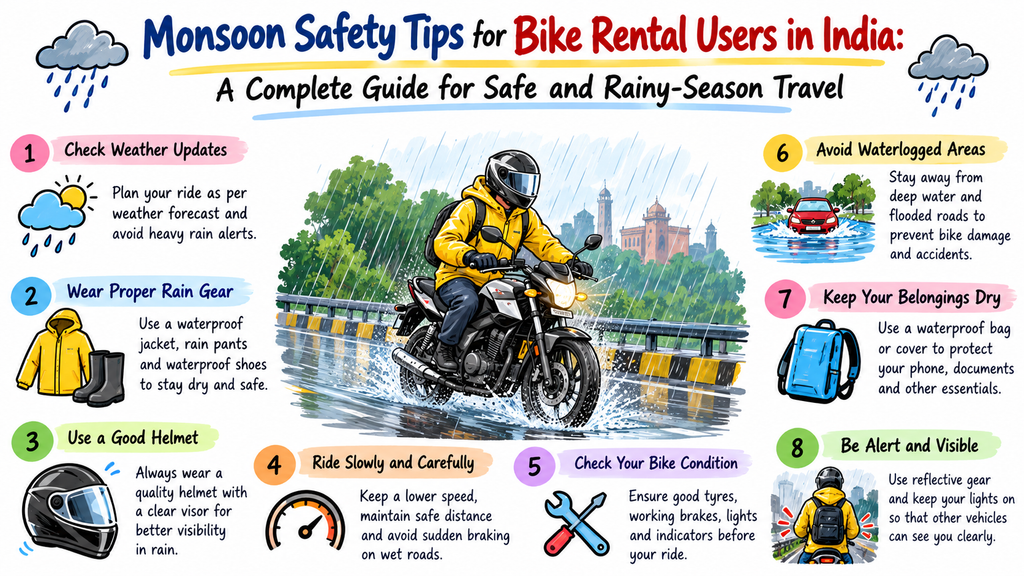
Monsoon Safety Tips for Riding a Rental Bike in India
Safe riding requires extra attention during the rainy season. Even familiar roads can become dangerous when water, oil, and mud cover the surface.
Follow Traffic Rules
Obey speed limits, traffic signals, lane rules, and local restrictions. Keep a safe distance from other vehicles because stopping distances may increase on wet roads.
Avoid sudden lane changes and sharp turns. Use your indicators early and remain alert at junctions.
Wear a Helmet and Suitable Rain Gear
Wear a properly fitted helmet and secure its strap. Your passenger should also wear a helmet.
Choose a rain jacket and trousers that allow free movement. Avoid loose clothing that can catch in moving parts.
Keep your visor clean and use suitable anti-fog measures if needed. Never ride if rain or fog prevents you from seeing clearly.
Avoid Overspeeding and Sudden Braking
Wet roads reduce tyre grip. Accelerate gently and brake smoothly.
Slow down before bends rather than braking sharply while turning. Avoid sudden movements around painted road markings, metal covers, gravel, and oily surfaces.
Never Ride Through Flooded Roads
Water can hide potholes, open drains, debris, and damaged road surfaces. It may also affect the engine or electrical components.
Do not attempt to cross a flooded street just because other vehicles are doing so. Turn around and choose a safe alternative route.
If your bike stalls in water, move to safety and contact the rental provider. Do not repeatedly attempt to restart an engine that may have taken in water.
Check Weather and Road Conditions
Heavy rainfall can cause waterlogging in Mumbai, traffic delays in Delhi, and slippery roads around Bangalore.
Travelers in Goa should watch for sudden downpours. Visitors exploring routes near hill regions should check for landslides and closures.
Delay or cancel the ride if conditions become unsafe.
Keep Emergency Contacts Handy
Save the rental provider’s number and relevant emergency contacts. Carry a charged phone and a power bank in a waterproof pouch.
Tell someone your planned route if you are traveling outside the city. Stop at a safe location if visibility becomes poor.
Park Safely During Heavy Rain
Choose a stable, legal parking area away from drains, flowing water, and flood-prone underpasses.
Avoid parking beneath unstable trees or structures during strong winds. Follow the provider’s instructions for securing the vehicle.
Cost of Bike Rental in India During the Monsoon
Rental prices depend on the city, vehicle model, provider, booking duration, and local demand. The following figures are illustrative planning estimates, not verified live prices.
| Vehicle category | Indicative daily rental range |
|---|---|
| Scooters | ₹300–₹800 |
| Commuter bikes | ₹400–₹1,000 |
| Premium bikes | ₹1,000–₹3,000 |
| Adventure bikes | ₹1,500–₹4,000 or more |
What Affects Rental Prices?
- Vehicle type: Premium and adventure motorcycles often cost more.
- Rental duration: Longer bookings may have different rates.
- Location: Availability and local demand affect prices.
- Mileage limits: Extra distance may incur additional charges.
- Security deposit: The deposit affects the upfront amount.
- Additional services: Delivery or other optional services may increase the cost.
How to Manage Your Rental Budget
Compare several suitable vehicles and check the final payable amount before booking.
For example, a student traveling around Pune may choose a commuter bike instead of a premium model. A tourist in Chennai may select a scooter for short local journeys when the weather is suitable.
Avoid choosing a vehicle based only on price. Tyre condition, braking performance, insurance terms, and breakdown support are especially important during the monsoon.
Common Mistakes First-Time Bike Rental Users Should Avoid
A few common mistakes can turn a simple journey into a stressful experience.
- Ignoring the forecast: Check weather warnings before every ride.
- Choosing an unsuitable bike: Match the vehicle to your experience and route.
- Skipping the inspection: Check tyres, brakes, lights, and visible damage.
- Riding through floodwater: Never assume that submerged roads are safe.
- Braking suddenly: Use smooth inputs and maintain extra distance.
- Wearing unsuitable rain gear: Avoid clothing that blocks your vision or movement.
- Ignoring the rental agreement: Understand the fees, coverage, and return rules.
- Assuming insurance covers everything: Confirm exclusions and reporting requirements.
- Planning too many stops: Allow extra time for rain and traffic delays.
- Continuing in dangerous weather: Stop somewhere safe or postpone the journey.
Your travel plans can change. A delayed trip is better than an unsafe ride.
Bike Rental vs Public Transport vs Taxi During the Monsoon
The best transport option depends on the weather, distance, budget, and comfort you need.
| Factor | Bike rental | Public transport | Taxi |
|---|---|---|---|
| Cost | Often economical for suitable short trips | Usually affordable | Can cost more for repeated journeys |
| Convenience | Flexible but requires safe riding | Depends on routes and schedules | Convenient for direct journeys |
| Flexibility | High within rental terms | Limited by routes and timetables | Moderate to high, depending on availability |
| Comfort | Exposed to rain and road conditions | Varies by service and crowding | Offers weather protection |
| Travel experience | Personal and flexible | Useful for experiencing local travel | Allows passengers to relax |
| Best use cases | Short trips in suitable weather | Connected city routes and rainy days | Heavy rain, luggage, or journeys requiring extra comfort |
Which Option Is Better in Rainy Weather?
Choose a rental bike when the weather is suitable, the route is safe, and you have the required riding skills.
Public transport may be a better choice during heavy rain, particularly in cities with reliable metro, bus, or suburban rail services.
A taxi can be useful when you need door-to-door travel, carry luggage, or want protection from the weather. Compare availability and fares before leaving.
How MotoShare Asia Can Help Travelers
MotoShare Asia operates in the vehicle rental and sharing space. Travelers should confirm the platform’s current listings, service areas, and booking terms before making plans.
The following features are useful to look for when evaluating MotoShare or another rental platform.
Easy Online Booking
Online booking can help you review vehicle options, dates, pickup points, and rental conditions before departure.
Check the booking confirmation carefully. Make sure the pickup location and return time match your plans.
A Suitable Range of Vehicles
Depending on local availability, rental marketplaces may offer scooters, commuter motorcycles, premium bikes, adventure bikes, and cars.
During the monsoon, prioritize vehicle condition and suitability over appearance or engine size.
Transparent Pricing
Clear pricing helps you understand the total cost. Review the rental charge, security deposit, fuel rules, mileage limits, and additional fees.
Ask the provider to explain any unclear charges before payment.
Verified Vehicle Owners
If the platform connects renters with vehicle owners, check its verification process and support arrangements.
Confirm who will help if the bike develops a mechanical problem or becomes unsafe to ride.
Flexible Rental Options
Short-term rentals can help students, commuters, and tourists arrange transport for a few hours or days.
Confirm that the provider supports your required rental duration and return time.
Availability Across Indian Cities
Travelers may look for bike rental in Delhi, Mumbai, Bangalore, Goa, Jaipur, Pune, Hyderabad, Chennai, and Kolkata.
Availability can vary by city and date. Confirm the exact location and vehicle listing before booking.
Visit motoshare.asia to check current service coverage and available options. Do not assume that every listed service or vehicle type is available in every Indian city.
Frequently Asked Questions
1. Is it safe to rent a bike during the monsoon in India?
It can be safe when weather and road conditions are suitable, the bike is well maintained, and the rider follows safety precautions. Avoid riding during heavy rain, flooding, or poor visibility.
2. What are the most important monsoon safety tips for bike rental users?
Inspect the tyres and brakes, wear a suitable helmet, reduce speed, maintain a safe distance, check the forecast, and avoid flooded roads.
3. Can tourists rent a bike in India during the rainy season?
Yes, tourists may rent bikes if they meet the applicable licensing and rental requirements. They should also check weather conditions and confirm that the vehicle is suitable for their planned route.
4. Is an international driving permit required?
Requirements depend on the visitor’s license and applicable Indian rules. Some foreign visitors may need an International Driving Permit. Confirm the requirements before booking.
5. How much does bike rental cost in India?
Illustrative daily rates may range from ₹300–₹800 for scooters and ₹400–₹1,000 for commuter bikes. Premium and adventure motorcycles may cost more. Actual prices vary by location and provider.
6. Are helmets provided with rental bikes?
Some providers supply helmets, while others may have different arrangements. Confirm availability and inspect the helmet before starting your trip.
7. Can I rent a bike without a security deposit?
Some providers may offer different payment arrangements, but many require a refundable deposit. Check the specific provider’s terms before booking.
8. What should I do if my rental bike breaks down in heavy rain?
Move to a safe location away from traffic and floodwater. Contact the rental provider and follow its breakdown procedure. Do not attempt repairs beyond your ability or authorization.
9. Can I take a rental bike to another city during the monsoon?
That depends on the rental agreement. Obtain permission for interstate travel and check the route conditions before leaving.
10. Should I ride a rental bike through a waterlogged road?
No. Floodwater can hide potholes, open drains, and debris. Turn around and find a safer route.
11. Which bike is best for monsoon travel in India?
The best option depends on your route, riding experience, and vehicle condition. A familiar scooter or commuter motorcycle may suit short trips, but no bike makes unsafe weather or flooded roads safe.
12. Can I use an electric scooter during the monsoon?
You may use one when the manufacturer permits operation in the expected conditions. Follow its water-exposure guidance, check the battery range, and never charge wet or damaged equipment.
13. Is bike rental cheaper than taking a taxi during the monsoon?
It may be cheaper for some trips, but the total cost depends on rental charges, fuel, mileage, and other fees. A taxi may offer better comfort during heavy rain.
14. Does MotoShare Asia offer bike rentals in my city?
Availability depends on the platform’s current service coverage and listings. Visit motoshare.asia to check your location, vehicle options, and rental terms before booking.
Conclusion
The monsoon can make India beautiful, but rainy roads demand careful planning. Wet surfaces, poor visibility, potholes, and waterlogging can make even a short journey challenging.Before renting a bike, check the weather, select a vehicle you can handle, inspect the tyres and brakes, and understand the rental agreement. Wear a properly fitted helmet, ride slowly, and never cross flooded roads.Whether you are exploring Goa, traveling through Mumbai, commuting in Bangalore, or planning a short trip around Pune, choose your transport according to the conditions. Public transport and taxis may be safer alternatives during severe rain.For travelers considering bike rental in India, compare available vehicles, costs, and safety arrangements before confirming a booking.
Plan your next journey with MotoShare Asia. Visit motoshare.asia to check current availability, review rental conditions, and explore suitable vehicle options. Confirm the service area before booking, and choose safety over speed whenever the weather changes.