Introduction
Night travel can be convenient for people who want to avoid daytime traffic, reach their destination early, or make the most of a short trip. In India, nighttime journeys are common among working professionals, tourists, students, families, and long-distance travelers. Whether you are returning from an airport, driving between cities, or heading back to your hotel after an evening outing, a rental car can provide flexibility and independence.
However, driving after dark requires additional preparation. Reduced visibility, fatigue, poorly lit roads, unexpected obstacles, and limited access to assistance can make nighttime journeys more challenging. If you are using an unfamiliar rental car, you also need to understand its controls, headlights, braking response, and safety features before starting your trip.MotoShare Asia
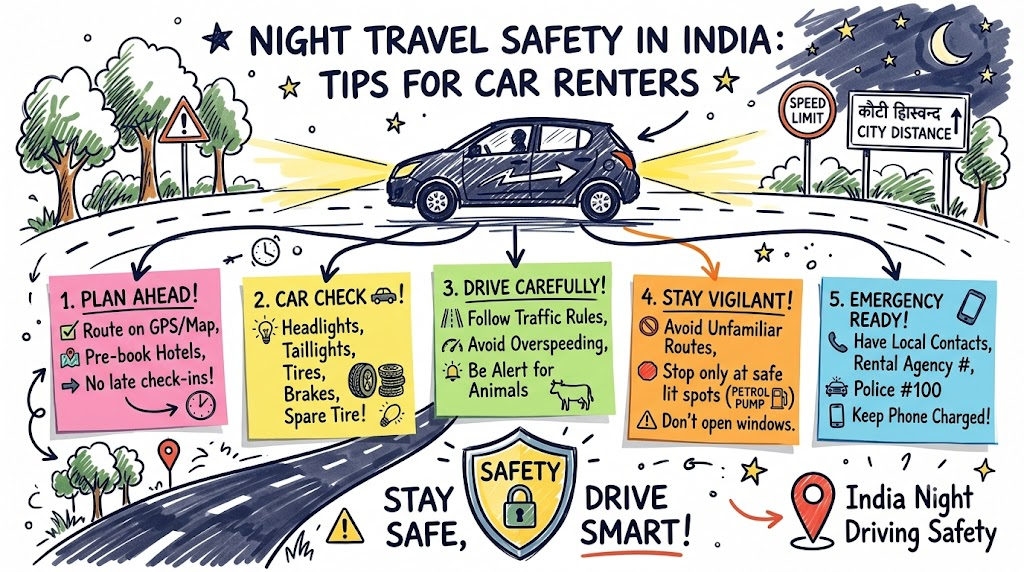
Following practical night travel safety tips for car renters can help you make informed decisions and reduce avoidable risks. From checking the vehicle and planning your route to recognizing fatigue and handling emergencies, a few sensible precautions can make your journey safer and less stressful.
This guide covers essential night driving practices, vehicle inspection tips, emergency preparation, and transportation choices for travelers in India. It also explains when renting a bike or scooter may be useful for short local journeys and why safety should always come before convenience.
Why Night Travel Requires Extra Care
Driving at night presents different challenges from daytime travel. Drivers have less visual information, may experience fatigue, and can find it harder to identify hazards early.
Reduced Visibility
Streetlights may be limited outside major cities. Potholes, pedestrians, animals, roadwork, and stationary vehicles can be difficult to notice in darkness.
Even on well-lit roads, glare from oncoming headlights and reflections from wet surfaces can affect visibility. Reduce your speed when necessary, keep your windscreen clean, and maintain enough distance from the vehicle ahead to stop safely.
Fatigue and Reduced Concentration
The body’s natural sleep cycle can make people feel drowsy during late-night and early-morning hours. Fatigue can slow reaction times, affect judgment, and make it harder to respond to unexpected situations.
A long working day followed by a late drive can be particularly risky. If you feel sleepy, do not rely on loud music, open windows, or caffeine to make driving safe. Stop at a suitable location and rest, or arrange alternative transportation.
Unfamiliar Roads and Limited Services
Travelers may not know which roads are well-lit, where fuel stations are available, or which areas offer safe stopping points. Navigation mistakes can become more stressful when businesses and services are closed.
Plan your route before departure, identify suitable stopping points, and keep the rental provider’s contact information accessible.
Who Should Follow Night Travel Safety Tips?
Night driving precautions are useful for anyone using a rental vehicle after dark.
- Tourists: Visitors returning from sightseeing, restaurants, beaches, or evening events.
- Working professionals: Employees travelling after late meetings, conferences, or airport transfers.
- Students: Students travelling between campuses, hostels, railway stations, and bus terminals.
- Families: Parents travelling with children or older family members who may need planned breaks.
- Long-distance travelers: Drivers travelling between cities or reaching a destination early in the morning.
- First-time rental customers: People unfamiliar with the rental car’s controls, handling, or roadside assistance arrangements.
If you are tired, unfamiliar with the route, or uncomfortable driving in darkness, consider taking a taxi or another suitable transport service instead.
Inspect Your Rental Car Before Driving at Night
A basic vehicle inspection is essential before beginning a nighttime journey. Problems that are easy to notice in daylight may be harder to identify after sunset.
Check All Lights
Confirm that the headlights, high beams, tail lights, brake lights, indicators, hazard lights, and reversing lights are working.
Clean the headlights and windscreen if they are dirty. Learn how to operate the headlight controls and avoid using high beams when they could dazzle other road users.
If a required light is not working, ask the rental provider to resolve the problem or arrange another vehicle before leaving.
Inspect Tires and Brakes
Look for visibly damaged tires, unusually low tire pressure, and signs of excessive wear. Do not start a journey if a tire appears unsafe.
Test the brakes gently in a safe area before entering busy traffic. Pay attention to unusual noises, warning lights, or changes in braking response. Report concerns to the rental provider rather than assuming they are normal.
Adjust Your Seat and Mirrors
Set your seat, head restraint, steering position, and mirrors before moving. Make sure you can reach the pedals comfortably and see the road without obstruction.
Locate the hazard-light switch, wipers, defogger, headlight controls, and parking brake. Knowing where these controls are can help you respond more confidently when conditions change.
Check Fuel and Dashboard Warnings
Confirm that you have enough fuel for the planned journey and identify possible refueling points along the route.
Check the dashboard for warning indicators. If a warning suggests a serious safety issue, contact the rental provider before driving.
Confirm Emergency Assistance
Save the rental provider’s contact number and roadside assistance details. Read the rental agreement for instructions about breakdowns, accidents, towing, and replacement vehicles.
Keep your booking confirmation and vehicle details accessible in case you need help.
Plan Your Route Before Leaving
Good route planning reduces uncertainty and can help you avoid unnecessary driving in unfamiliar areas.
Choose Suitable Roads
Whenever practical, use established roads with appropriate lighting, clear signage, and access to services. The shortest route is not always the safest or most convenient option.
Navigation applications can help identify traffic conditions and road closures, but their directions should never override road signs or safe driving judgment.
Identify Safe Stopping Points
Before departure, identify fuel stations, rest areas, and other suitable places where you can stop safely.
Avoid stopping on isolated road shoulders unless an emergency makes it necessary. If your vehicle develops a problem, move away from moving traffic whenever possible and follow local emergency guidance.
Share Your Travel Plans
Tell a trusted person your destination and approximate arrival time, especially if you are travelling alone or driving between cities.
For longer journeys, share your route and let them know if your plans change substantially. Avoid posting live travel details publicly if doing so could compromise your privacy.
Keep Essential Information Accessible
Mobile connectivity can be unreliable on some routes. Save your destination, rental provider’s phone number, emergency contacts, and essential route information before departure.
Keep your phone charged and use a suitable hands-free navigation arrangement. Never hold or operate your phone while driving.
Essential Night Driving Safety Tips for Rental Car Users
Safe driving habits are more important than reaching your destination a few minutes earlier.
Drive at a Speed Suitable for Visibility
Follow posted speed limits, but remember that the legal limit is not necessarily safe for every condition.
Reduce speed when visibility is poor, the road is wet, pedestrians are nearby, or the surface is uneven. Maintain enough distance from the vehicle ahead to respond safely if it brakes suddenly.
Use Headlights Correctly
Use appropriate headlights after dark and whenever visibility requires them. Switch from high beams to low beams when approaching other vehicles or following another driver closely.
Avoid looking directly at oncoming headlights. Focus on your lane and the road ahead while remaining aware of surrounding traffic.
Watch for Pedestrians, Cyclists, and Animals
In many Indian cities and rural areas, pedestrians, cyclists, motorcycles, and animals may share the road with cars. Some road users may be difficult to see in low light.
Approach crossings, village roads, market areas, and unlit stretches carefully. Be prepared to slow down when visibility is limited.
Avoid Distracted Driving
Set navigation, music, and climate controls before starting. Keep your phone out of your hands and avoid texting, eating, or performing other distracting activities while driving.
If you need to change your route or answer an important call, stop at a safe and permitted location first.
Never Drive Under the Influence
Do not drive after consuming alcohol or any substance that may impair alertness, coordination, or judgment.
If you have been drinking, arrange a taxi, a designated sober driver, or another safe transport option. Never assume that feeling normal means you are safe to drive.
Be Careful in Rain and Fog
Rain can reduce visibility and make roads slippery. Fog can limit how far ahead you can see, while standing water may conceal road damage.
Reduce speed, increase following distance, and use the appropriate lights. Avoid sudden braking or sharp steering movements. If visibility becomes dangerously poor, stop at a safe location and wait for conditions to improve.
Night Travel Safety in Popular Indian Cities
Road conditions and traffic patterns vary between destinations. Consider the challenges of your particular route instead of relying on a single driving strategy.
Delhi
Delhi’s main roads may remain busy late into the evening, while some outer routes have poorly lit stretches. Plan your route before departure, follow traffic signals, and pay attention to pedestrians and two-wheelers.
If you are returning from the airport, confirm the rental pickup and drop-off arrangements in advance.
Mumbai
Mumbai can experience congestion around major roads, commercial areas, and transport hubs. Allow extra time for unexpected delays and avoid rushing to meet a vehicle-return deadline.
For short journeys in crowded areas, a taxi or public transportation may be more practical than driving and searching for parking.
Bengaluru
Technology parks and residential areas can be spread across Bengaluru. If you are leaving a late meeting, check the route and expected travel time before starting.
Avoid attempting a long drive after a full working day if fatigue is affecting your concentration.
Goa
Goa’s roads connect beaches, towns, villages, and accommodation areas. Some stretches may be narrow or poorly lit, and unfamiliar drivers may encounter pedestrians or animals.
Plan your return journey before an evening outing. Never drive after consuming alcohol, and consider a taxi if you are too tired to drive safely.
Jaipur
Jaipur includes busy urban roads as well as routes connecting destinations outside the city. Plan longer journeys carefully and avoid assuming that rural roads will have the same lighting and services as central areas.
Pune and Hyderabad
Both cities have major business districts and expanding road networks. Check traffic conditions, follow lane markings, and plan ahead when travelling between residential areas and offices.
Chennai and Kolkata
In Chennai, be prepared for changing traffic conditions and wet roads during heavy rain. In Kolkata, pay attention to pedestrians, crossings, and busy market areas, especially where lighting or visibility is limited.
Across all these destinations, road conditions can change. Use current local information and exercise caution rather than assuming that a familiar route is always safe at night.
What to Carry for a Night Journey
A small amount of preparation can help you manage common problems during a nighttime trip.
Before leaving, make sure you have:
- Your valid driving license and required identification.
- Rental agreement and booking confirmation.
- Rental provider and roadside assistance contact details.
- A charged mobile phone and suitable charging cable.
- Drinking water and basic personal supplies.
- A flashlight for emergencies.
- A first-aid kit, if available.
- Any personal medication you may need.
- Enough fuel or a plan for charging if you are using an electric vehicle.
Check that any emergency equipment required by local law is present in the rental vehicle. Do not attempt repairs in a dangerous location or near moving traffic.
What to Do If Your Rental Car Breaks Down at Night
A breakdown can be stressful, especially on an unfamiliar road. Follow a calm, safety-focused process.
- Move to a safe location if possible. If the vehicle remains controllable, leave the traffic lane and stop somewhere safe.
- Make the vehicle visible. Activate the hazard lights and follow local requirements for warning devices when it is safe to do so.
- Protect yourself and your passengers. Avoid standing near moving traffic. If you must leave the vehicle, choose a safe location away from the road whenever possible.
- Contact roadside assistance. Use the number supplied by the rental provider and explain your location and the problem.
- Follow the provider’s instructions. Do not arrange expensive repairs without authorization unless immediate action is necessary to address a safety emergency.
- Contact emergency services when necessary. If there is an immediate threat to life or safety, contact the appropriate local emergency service.
If you are involved in an accident, prioritize safety, contact emergency services when needed, and follow the rental provider’s reporting procedure. Document the incident when it is safe to do so.
Cost Considerations for Night Travel
Night travel costs depend on the rental duration, vehicle type, distance, fuel consumption, tolls, parking, and provider policies.
For example, a short nighttime journey within a city may cost less overall by taxi if you only need a single transfer. A self-drive rental may be more practical if you need a vehicle for several destinations or plan to travel the following morning as well.
Before booking, compare:
- Daily or hourly rental charges.
- Fuel or charging expenses.
- Security deposit requirements.
- Insurance and damage protection.
- Toll and parking costs.
- Late-return charges.
- Additional fees for pickup or drop-off outside normal hours, if applicable.
Do not assume that a rental car is automatically the cheapest option. Compare the total cost with other suitable transport options for your actual itinerary.
Rental Car vs. Taxi vs. Public Transport at Night
The right transport option depends on your route, schedule, budget, and comfort level.
| Factor | Rental car | Taxi or ride-hailing | Public transport |
|---|---|---|---|
| Cost | May offer value for several trips; fuel and fees apply | Pay per journey; fares vary by distance and demand | Often economical where services are available |
| Convenience | Flexible, but you must drive and park | Convenient for direct journeys | Depends on routes and operating hours |
| Flexibility | High within rental conditions | Moderate; availability may vary | Limited by schedules and routes |
| Comfort | Private space and control over stops | Private journey without self-driving | Varies by service and crowd levels |
| Safety considerations | Requires alertness, vehicle checks, and route planning | Choose a reputable service and verify the vehicle and driver | Use established stops and follow local safety advice |
| Best use cases | Multiple stops and suitable routes | Airport transfers, short trips, or when tired | Well-connected urban routes |
A rental car may be practical for several stops when you are alert and comfortable driving. A taxi may be more suitable for a single transfer or when you do not want to drive yourself.
If you feel sleepy, unwell, or uncomfortable driving after dark, choose a transport option that does not require you to drive.
How Bike Rentals Can Support Short Local Trips
Although this guide focuses on rental cars, two-wheeler rentals can be useful for certain short journeys in India. They may help travelers move around a destination without hiring a car for the entire day.
For example, a visitor in Goa may consider a scooter for a short daytime journey between nearby locations. In Jaipur, Pune, or Bengaluru, a rented two-wheeler may be practical for suitable local routes when traffic and parking make a car inconvenient.
However, a bike or scooter is not automatically safer at night. Two-wheeler riders have less physical protection than car occupants and may be more exposed to poor road surfaces, rain, reduced visibility, and surrounding traffic.
If you choose bike rental in India, check your license eligibility, helmet availability, vehicle condition, insurance terms, and rental agreement. Wear a properly fitted helmet, use visible clothing, and avoid riding when tired or after consuming alcohol.
For unfamiliar routes, severe weather, long distances, or poor lighting, consider postponing the journey or choosing a more suitable transport option.
How MotoShare Asia Can Help Travelers Plan Vehicle Rentals
MotoShare Asia is the brand associated with this guide. Travelers considering a rental vehicle should verify the services, vehicle availability, participating owners, and booking conditions offered through the platform before making a reservation.
Compare Suitable Vehicle Options
Different journeys require different vehicles. A compact car may suit a city trip, while a scooter may be practical for a short local journey in appropriate conditions.
Compare vehicle types and rental periods according to your destination, passenger count, luggage, and travel plans.
Review Rental Conditions Before Booking
Check the total price, deposit requirements, insurance coverage, mileage restrictions, pickup arrangements, and return policy.
For nighttime travel, confirm whether the provider offers support outside normal business hours and how to report a breakdown or emergency.
Prepare Before Collecting Your Vehicle
Inspect the vehicle, confirm the fuel level, test essential lights, and save the rental provider’s contact information before departure.
If a vehicle appears unsafe or a required safety feature is not working, contact the provider before beginning the journey.
Choose a Practical Travel Plan
A rental vehicle can offer flexibility, but it should suit the route and the driver’s condition. If your plans involve a late event followed by a long drive, consider arranging a taxi or a place to rest instead of driving while tired.
Confirm any specific MotoShare Asia features, coverage areas, or verification procedures directly on the platform before booking.
Frequently Asked Questions
1. Is it safe to drive a rental car at night in India?
Night driving can be manageable when the driver is alert, the vehicle is roadworthy, and the route is suitable. Reduced visibility, fatigue, and unfamiliar roads increase risk, so plan carefully and avoid driving when tired.
2. What should I check before driving a rental car at night?
Check the headlights, tail lights, indicators, tires, brakes, fuel level, mirrors, and dashboard warnings. Confirm that the rental provider’s emergency contact information is available.
3. Should I drive long distances overnight?
Only consider a long nighttime drive if you are well-rested, comfortable with the route, and the vehicle is suitable. If you are sleepy, stop safely and rest or arrange another transport option.
4. What documents should I carry when using a rental car?
Carry your valid driving license, required identification, rental agreement, and booking confirmation. Additional requirements may apply depending on the provider and location.
5. What should I do if the car breaks down at night?
Move to a safe place if possible, turn on the hazard lights, avoid standing near moving traffic, and contact the rental provider’s roadside assistance service. Follow its instructions for recovery or repairs.
6. Is it better to rent a car or take a taxi at night?
A rental car may suit a journey with multiple stops when you are alert and comfortable driving. A taxi may be more appropriate for a single transfer or when you do not want to drive yourself.
7. Can tourists rent a bike or scooter in India?
Tourists may be able to rent a two-wheeler if they meet the applicable license, identification, age, and rental-provider requirements. International visitors should confirm whether an International Driving Permit or another document is required.
8. Are helmets provided with bike rentals?
Helmet availability depends on the rental provider and vehicle. Confirm this before booking, and use a properly fitted helmet that meets applicable requirements.
9. Is a security deposit required for rental vehicles?
Many providers require a refundable deposit or payment-card preauthorization. The amount and refund timeline vary by provider, vehicle, and rental terms.
10. Can I take a rental vehicle to another city?
Some providers permit intercity travel, while others restrict the permitted area. Confirm state-border or intercity permissions, mileage limits, insurance conditions, and additional fees before departure.
11. What should I do if I feel sleepy while driving?
Stop at a safe location and rest. Do not rely on music, open windows, or caffeine as substitutes for adequate rest. If you cannot safely continue, arrange another driver or transport option.
12. Does MotoShare Asia offer roadside assistance for night journeys?
Roadside assistance depends on the specific provider and rental terms. Check the booking conditions and confirm the emergency contact procedure before collecting the vehicle.
Conclusion
Night travel can be convenient, but it requires thoughtful preparation and responsible decisions. Checking your rental vehicle, planning a suitable route, using headlights correctly, maintaining a safe speed, and staying alert can help reduce common nighttime driving risks.
For journeys across Indian destinations such as Delhi, Mumbai, Bengaluru, Goa, Jaipur, Pune, Hyderabad, Chennai, and Kolkata, allow extra time for traffic, poor lighting, road conditions, and unexpected delays. Compare rental cars, taxis, and public transportation according to your itinerary, and never drive when fatigue or alcohol affects your ability to operate a vehicle safely.
If you are considering bike rental in India for a short local trip, confirm that the vehicle and route are suitable, wear a helmet, and follow all applicable road rules.
Plan your next journey with safety in mind. Explore the vehicle rental options available through MotoShare Asia, review the rental conditions, and choose a suitable vehicle for your travel needs. Prepare before you leave, prioritize safety throughout your journey, and make every trip a more confident one.